Professor of Economics · University of Alicante

Carmen
Beviá

I am an economic theorist working on contests, political economy, social choice and applied game theory.

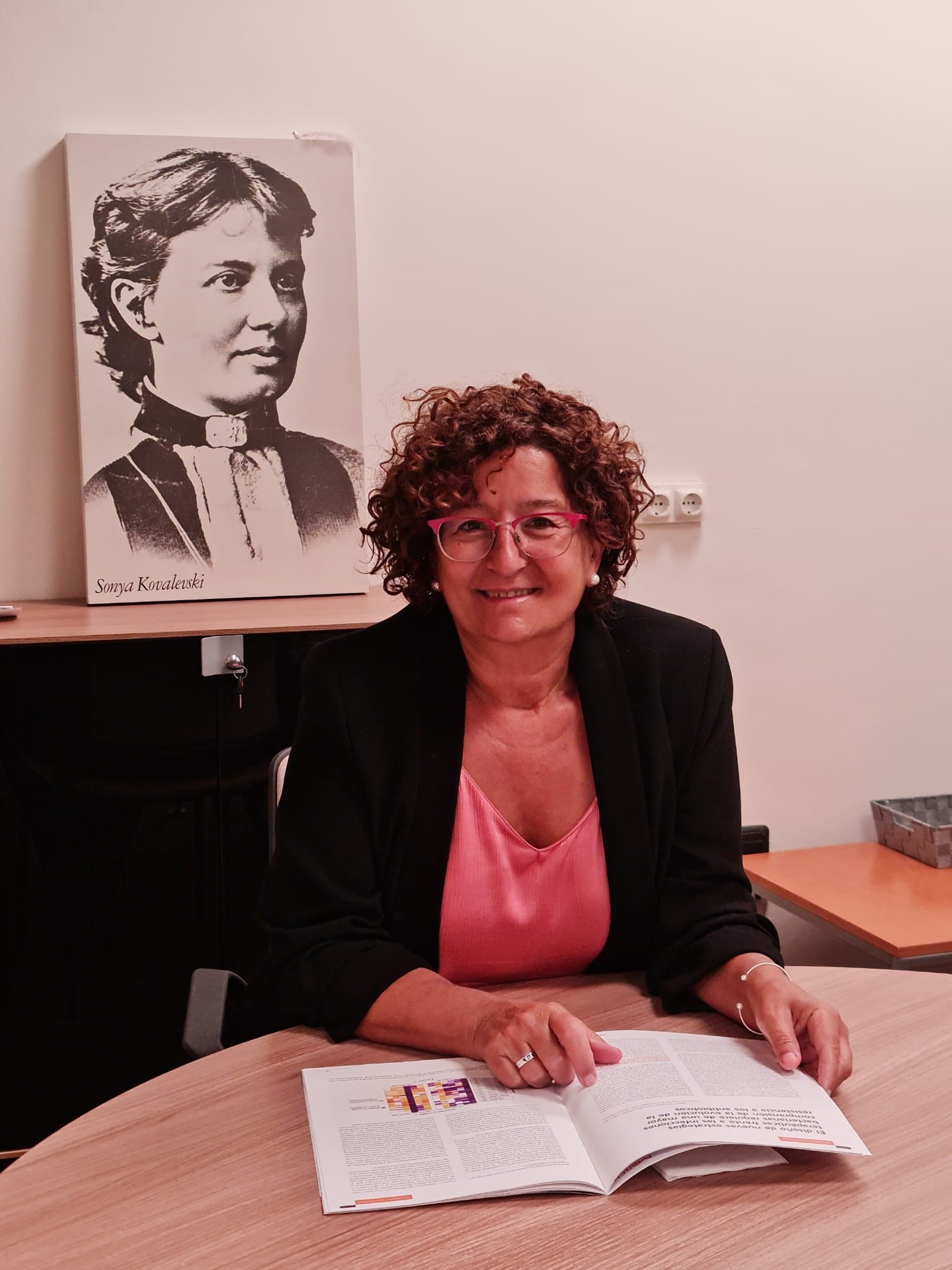
Carmen Beviá, with a portrait of mathematician Sofia Kovalevskaya in the background
Alicante, Spain38°20′ N · 0°29′ W

ECONOMIC THEORY · STRATEGIC INTERACTION

My research examines how strategic incentives and institutional rules shape individual effort, competition, conflict, and collective decision-making. My recent work focuses on dynamic competition under asymmetric resources and liquidity constraints, the economic and political effects of immigration, and strategic forecasting when accuracy competes with the desire to stand out.

Full ProfessorUniversity of Alicante
Department DirectorFundamentals of Economic Analysis
Associate EditorMathematical Social Sciences

01 / Research

Questions about competition,
institutions and choice.

01

Contest theory

How do contest rules shape effort, predation and conflict?

Many allocation problems involve agents competing for a prize, a patent, a territory or a contract. These situations can be modelled as contests and studied using game theory. My work examines how contest rules, resource asymmetries and dynamic constraints shape effort, predatory behaviour, sabotage and the prospects for peace:

  • How do contest technologies and centralized or decentralized designs affect effort, payoffs and strategic behaviour?
  • How do unequal resources, endogenous strength and the possibility of bankruptcy change incentives across stages of a contest?
  • When do competitive incentives lead to predation, sabotage or war—and when can peaceful agreements be sustained?

Current research More recently, I study why forecasters may make extreme or unlikely predictions that, if correct, can catapult them to prominence.

02

Political economy

How do political incentives shape economic outcomes?

My work studies how political institutions and competition influence information, redistribution, employment and the allocation of resources. It shows that democratic decisions can generate both intended benefits and unintended consequences:

  • How does holding office provide voters with information about politicians and affect electoral advantage?
  • Why may citizens support public subsidies for higher education even when their own children do not attend university?
  • Why might a group voluntarily relinquish political power, and how can democratic organizations generate exploitation or political unemployment?

Current research More recently, I study how voting shapes migration quotas and the allocation of immigrant labour across sectors.

03

Social choice

How can collective decisions be both fair and stable?

My work studies how voting and allocation rules shape organizations and societies:

  • How do meritocratic and egalitarian reward systems affect incentives, growth and organizational stability?
  • Can majority voting locate public facilities and form user groups that no one wishes to abandon?
  • How can we allocate what cannot be divided—and remain fair when the group of participants changes?
04

Game theory

How do rules and constraints shape strategic behaviour?

My work uses game theory to examine when decentralized interactions produce desirable outcomes—and when strategic manipulation, financial constraints or indivisibilities stand in the way:

  • Can market mechanisms implement competitive outcomes when agents behave strategically?
  • How do bankruptcy and financial constraints alter cooperation, punishment and market competition over time?
  • What forms of manipulation arise when agents allocate public or indivisible goods, and when is truthful behaviour impossible?

Current research

Dynamic competition under liquidity constraints

How early success, predation and limited resources reshape participation and investment in multi-stage contests.

Migration, sectoral allocation and voting

How the composition and allocation of immigrant labour affect economic efficiency and political preferences.

Strategic forecasting and reputational competition

How forecasters balance accuracy against distinctiveness when the reputational value of a correct prediction is diluted by the number of people making the same forecast.

02 / Publications

Complete
publication record.

View complete record ↗
2009

War or Peace

with Luis C. Corchón

The Political Economy of Democracy, Fundación BBVA · Book chapter

03 / The book

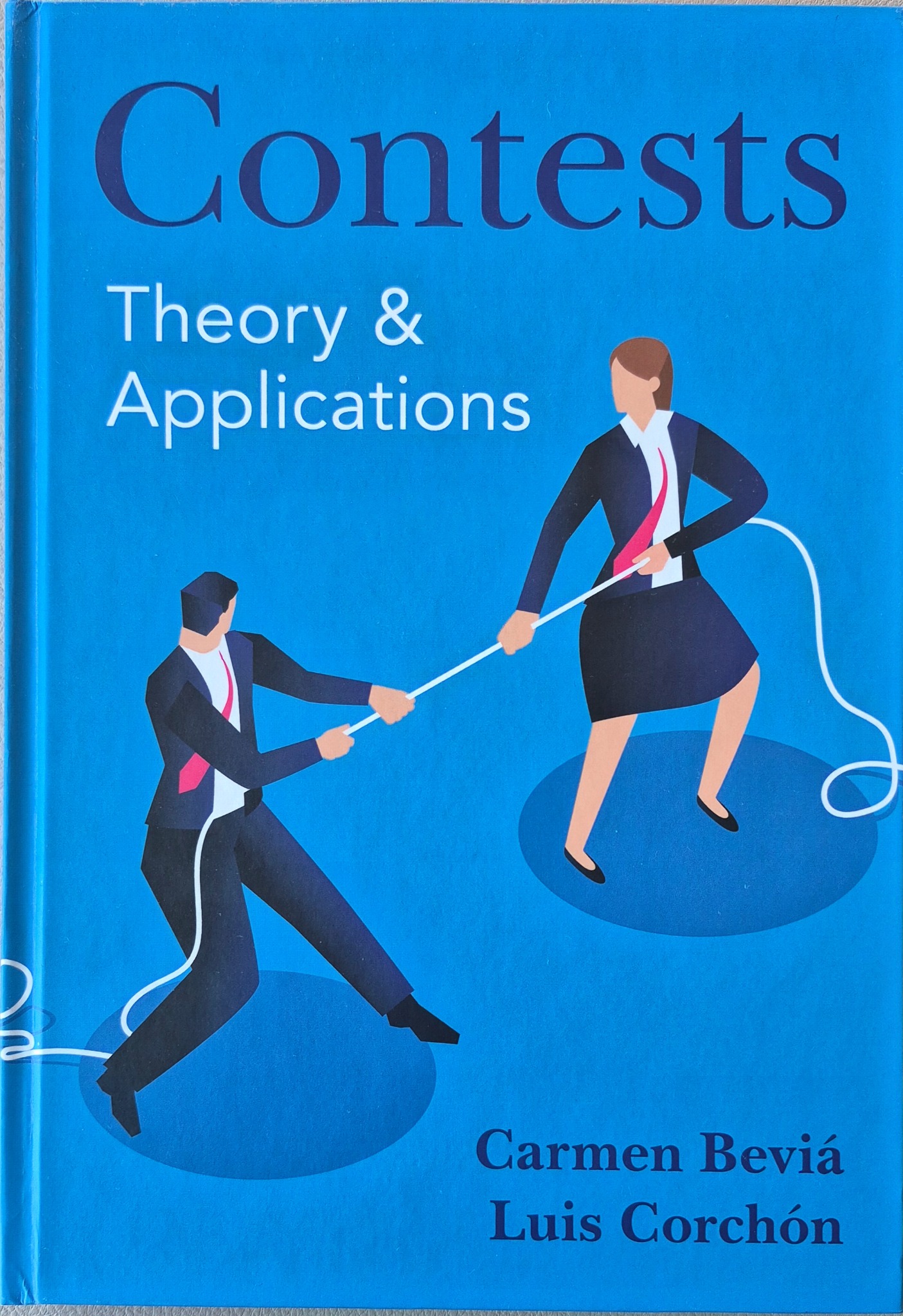
Contests: Theory and Applications

With Luis C. Corchón · Cambridge University Press · 2024

Contest theory is an important part of game theory used to analyse contests and conflicts. While traditional microeconomics focuses on well-defined property rights and voluntary exchange, contest theory studies situations in which agents do not trade those rights, but fight over them.

Contests: Theory and Applications offers a state-of-the-art discussion of both core theory and applications. Using elementary mathematics, it provides a versatile framework that connects labour, education, welfare and development with voting, industrial organisation, mechanism design, sport and military conflict.

12chapters
162exercises
320+references
Discover the book ↗

04 / Teaching & service

Teaching, supervision
and academic service.

I teach economic theory and mathematics, and supervise research in game theory, contests and political economy.

Department website ↗
Teaching

Introduction to Microeconomics, Microeconomic Theory, Game Theory, Mathematical Economics, Public Economics and Contest Theory.

Supervision

PhD and master’s research in theoretical and applied microeconomics

Editorial work

Associate Editor, Mathematical Social Sciences · Co-Editor, Journal of Mathematical Economics (2020–2025)

Academic service

President, Association of Southern European Economic Theorists

05 / Academic leadership

Building institutions
for research.

Alongside research and teaching, I have held extensive academic leadership responsibilities in postgraduate education, departmental management, scholarly publishing and the organization of international scientific activities.

University of Alicante

Director of the Department

Director of the Department of Fundamentals of Economic Analysis.

Regional Government

Universities & science policy

Secretary for Universities and Science (2020–2022) and Director General for Science and Research (2019), Generalitat Valenciana.

Scientific association

President of ASSET ↗

President of the Association of Southern European Economic Theorists.

Postgraduate education

Programme leadership

Former Director of economics PhD and master’s programmes at the University of Alicante and Universitat Autònoma de Barcelona.

Research evaluation

Advisory & assessment

Service on national and regional research-evaluation panels, doctoral programme reviews and scientific advisory bodies.

Scientific community

Conferences & networks

Leadership and organization of international conferences, research meetings and academic collaborations.

06 / Contact

Let’s discuss
economic ideas.

Department of Fundamentals of Economic Analysis
University of Alicante

Carretera de San Vicente del Raspeig, s/n
03690 Alicante, Spain